

Quick Answer: There is no official Starbucks calculator for drink costs, but you can estimate any drink with a simple method: start from the base price of your chosen size, then add typical surcharges for customizations like extra espresso shots, syrups, milk alternatives, and cold foam. This guide walks you through the method with worked examples.
Have you ever customized a drink in the Starbucks app and watched the price climb with every tap? An extra shot here, oat milk there, and suddenly your simple latte costs much more than you expected. A Starbucks calculator mindset lets you predict that total before you order, so there are no surprises at the register.
Starbucks does not publish an official cost calculator tool. But the pricing logic behind every drink is consistent enough that you can learn to estimate it yourself. In this guide, you will learn the component-based method: how each part of a drink contributes to the price, how to add up customizations, and how to work through real examples step by step.
Why There Is No Official Starbucks Calculator
Starbucks has never released a standalone Starbucks calculator that previews drink costs. The closest thing is the mobile app itself, which shows a running total as you build a customized order. That works well for app users, but it does not help you plan ahead, compare options side by side, or understand WHY one customization costs more than another.
Prices also vary by location, which makes a single universal calculator impractical. A surcharge that applies in one city may differ slightly in another because of local pricing tiers. Any estimate method therefore works in ranges and patterns rather than exact figures, which is actually more honest and more useful.
For a solid foundation on how menu pricing is structured, see our guide to Starbucks menu prices. The method below builds on that structure.
The Component Method: How to Estimate Any Drink
Think of every Starbucks drink as a stack of components, each of which nudges the price. Once you know the components, estimating the total becomes a simple addition exercise.
Step 1: Start with the base drink and size
Every drink has a base price determined by two things: the beverage itself and the size. Brewed coffee is the cheapest base at any size. Espresso drinks like lattes and cappuccinos sit in the middle. Blended Frappuccino beverages, shaken espresso drinks, and cold brew typically start higher. For size, remember the standard lineup: Short (8 oz), Tall (12 oz), Grande (16 oz), Venti (20 oz hot, 24 oz iced), and Trenta (31 oz, iced only).
Your base is the anchor of the estimate. Everything else is an addition to it.
Step 2: Account for espresso shots
Extra espresso shots are one of the most common customizations, and they carry one of the clearest surcharges. Standard recipes include a set number of shots per size (for example, a Grande hot latte typically includes two), and each additional shot adds a moderate, noticeable amount to the total. If you order a drink with an extra shot, expect the price to rise by roughly the cost of a small add-on, consistent across most locations.
Step 3: Account for syrups and sauces
Adding a flavored syrup such as vanilla, caramel, or hazelnut to a drink that does not already include it usually adds a small surcharge. Sauces like mocha or white chocolate behave similarly. Specialty seasonal syrups can cost a bit more than the everyday flavors. The key pattern: the first flavor in a standard recipe is often included in the base price, but extra pumps or entirely new flavors added to a plain drink typically add a charge.
Step 4: Account for milk alternatives
Swapping dairy milk for oat milk, almond milk, coconut milk, or soy milk usually adds a surcharge, since these alternatives cost Starbucks more to stock. This is one of the most consistent add-on charges across the menu. If you order dairy-free regularly, this line item adds up fast, which is why it deserves its own step in any Starbucks calculator method.
Step 5: Account for toppings and extras
Cold foam, whipped cream additions on drinks that do not include it, extra drizzle, and similar finishing touches each add a small to moderate surcharge. Cold foam in particular has become a popular customization, and its charge reflects the extra preparation. Light ice, on the other hand, is free, and it is one of the few customizations that changes your drink without changing the price.
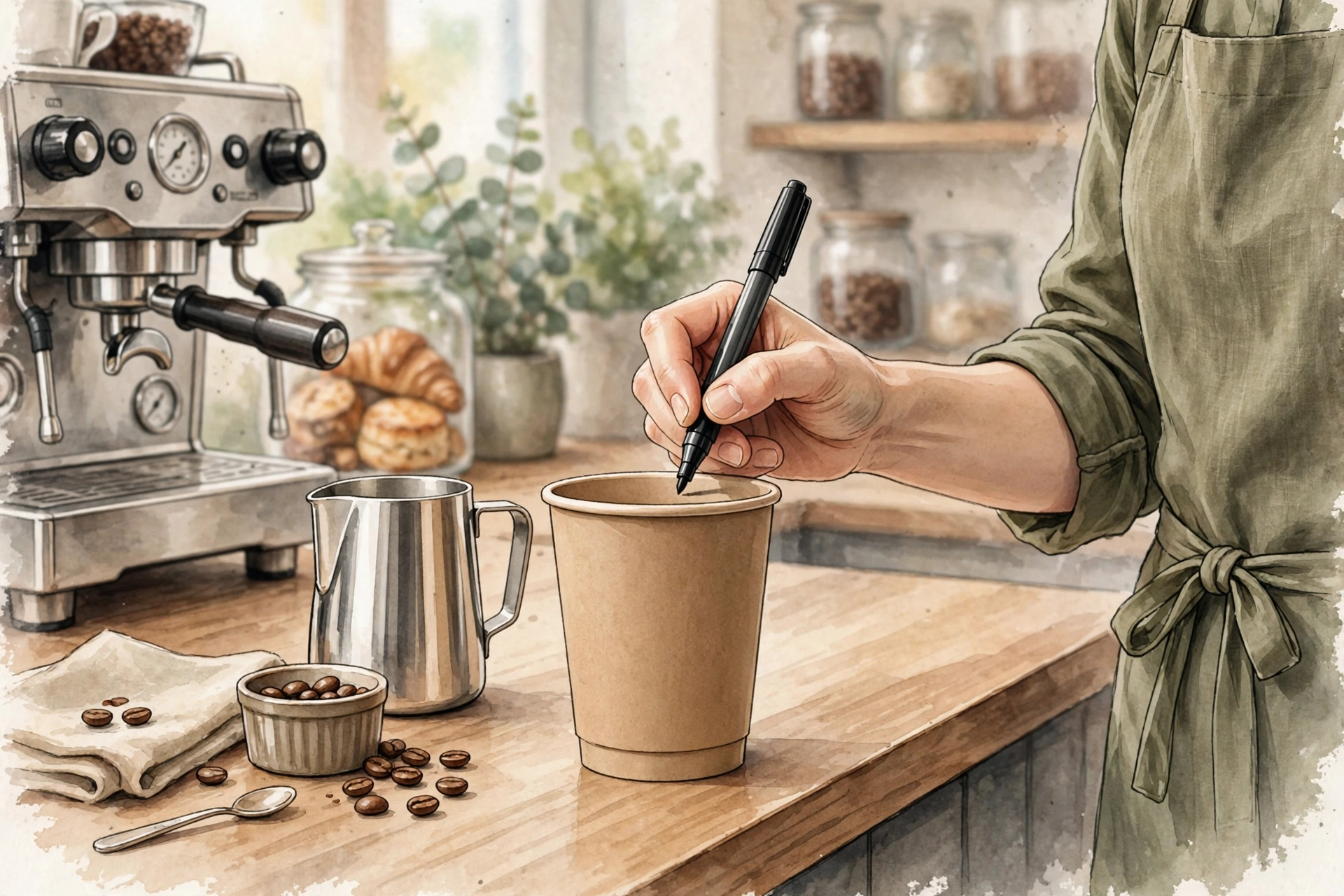
Worked Example 1: Grande Iced Latte with Oat Milk and Vanilla
Let us put the method to work. Imagine you want a Grande iced latte, but with oat milk instead of regular milk and vanilla syrup added.
Start with the base: a Grande iced latte. That is your anchor. Next, the oat milk swap adds the standard milk-alternative surcharge. Then the vanilla syrup adds the standard syrup surcharge, since a plain iced latte does not include flavor by default. Add the two surcharges to the base, and you have your estimate.
The pattern to notice: each customization is a small, predictable step. Two customizations roughly double the add-on portion of the price, but the base still dominates the total. This is why a heavily customized drink can surprise you, the base looks reasonable, but three or four add-ons stack into a meaningful increase.
Worked Example 2: Venti Cold Brew with Sweet Cream and Extra Shot
Now a more complex order: a Venti cold brew with sweet cream cold foam and an extra espresso shot.
Start with the base: a Venti cold brew, which already sits at a higher base price than brewed coffee because of the slow-steep process. The sweet cream cold foam adds the foam surcharge. The extra espresso shot adds the shot surcharge. Sum all three components and you land at the estimated total.
This example shows the method handling a premium base plus two popular add-ons. It also shows why cold brew drinkers feel price increases more sharply: the base is higher, so the same add-ons produce a higher total than they would on a simple brewed coffee. Our breakdown of Starbucks menu cost explains how base prices differ across drink categories.
Estimating Caffeine with the Same Method
A Starbucks calculator approach is not only useful for money. You can estimate caffeine the same way, by components.
The base drink determines the starting caffeine. Brewed coffee and cold brew generally contain the most caffeine per serving, followed by espresso drinks (scaled by shot count), with Frappuccino beverages and Refreshers typically lower. Each extra espresso shot adds a standard caffeine bump, roughly equivalent to one shot’s worth. Decaf swaps remove most of it.
Size matters too, but not always the way people expect. A Grande and a Venti hot latte often contain the same number of espresso shots in the standard recipe, so the caffeine is similar even though the volume differs. When in doubt, count the shots, not the ounces. For a deeper look at espresso-based options, see our guide to Starbucks espresso drinks.
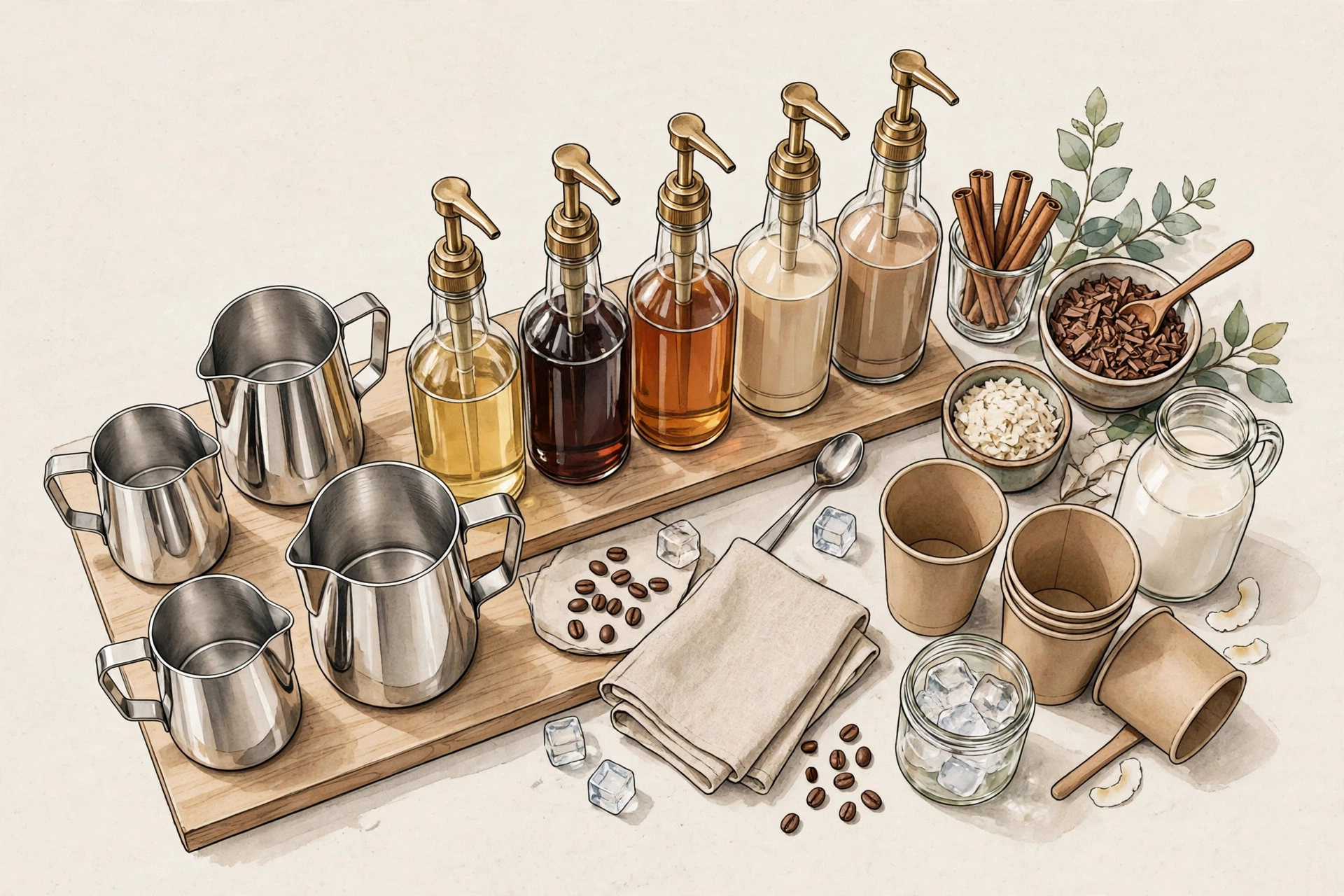
Estimating Calories with the Same Method
Calories follow the same component logic. Start with the base drink: black brewed coffee and plain cold brew are very low in calories, while lattes add milk calories and Frappuccino beverages add substantially more from milk, syrups, and whipped cream.
Each component then moves the needle. Whole milk adds more calories than nonfat or almond milk. Each pump of syrup adds a modest amount, and a drink with four pumps carries roughly four times that. Whipped cream and drizzles add a finishing bump. Sugar-free syrups cut the syrup calories significantly, which is why they are popular with calorie-conscious regulars.
The practical rule: milk choice and syrup count are the two biggest levers. If you want to estimate calories quickly, focus on those two and you will be close enough for everyday decisions.
Money-Saving Ordering Tips
Now that you can estimate costs like a Starbucks calculator, here are ways to bring the number down.
Order a smaller size of a strong drink instead of a large size of a mild one. A Tall latte with an extra shot often delivers similar caffeine to a Grande for less money. Ask for light ice in iced drinks to get more actual beverage for the same price. Choose the Short size for espresso drinks when it is available, it is the lowest-priced option and still packs the standard flavor.
Be strategic with customizations. Syrups you can skip, milk swaps you actually need, and foam you truly want are worth it; the rest is easy savings. Join Starbucks Rewards to earn Stars on every purchase, and remember that members can get free refills on brewed coffee and tea during the same visit. Finally, bringing a reusable cup earns a small discount at many locations.
Frequently Asked Questions
Is there an official Starbucks drink cost calculator?
No. Starbucks has not released an official cost calculator tool. The mobile app shows a running total as you customize an order, which is the closest official option. The component method in this guide replicates that logic for planning ahead.
How much does an extra espresso shot cost at Starbucks?
An extra shot carries a moderate surcharge that is fairly consistent across locations, though the exact amount varies by store. As a rule of thumb in a Starbucks calculator estimate, treat it as one of the larger single add-on charges on the menu.
Does oat milk cost extra at Starbucks?
Yes, swapping to oat milk (or almond, coconut, or soy milk) typically adds a surcharge at most locations. If you order dairy-free drinks regularly, factor this into every estimate, since it applies to each drink.
How can I estimate the calories in my customized drink?
Start from the base drink’s typical calorie range, then add for each component: milk choice is the biggest factor, followed by syrup pumps, then toppings like whipped cream. Sugar-free syrups and nonfat or almond milk keep the total lower.
Why does my customized drink cost so much more than the menu price?
The menu price is the base drink at a standard recipe. Each customization, extra shots, syrups, milk alternatives, cold foam, adds its own surcharge. Three or four add-ons can raise the total noticeably above the listed base price.
What is the cheapest way to get caffeine at Starbucks?
A Short or Tall brewed coffee is usually the lowest-cost caffeine per dollar. Adding an extra shot to a Tall brewed coffee or latte is often cheaper than sizing up to a Grande or Venti for a similar caffeine lift.
Conclusion
You do not need an official Starbucks calculator to predict your total. Learn the five components, base drink and size, espresso shots, syrups, milk alternatives, and toppings, and you can estimate any order in seconds. The method also works for caffeine and calories, and it reveals exactly where your money goes. Order with the estimate in mind, trim the customizations you do not need, and let rewards and refills do the rest.
This site is an independent guide and is not affiliated with or endorsed by Starbucks.
For the most current official information on Starbucks calculator options, visit the Starbucks website.